Why Squat Depth That Feels Perfectly Controlled Alone Can Quietly Collapse in a Group Class
Squat depth that looks textbook-controlled during solo practice, with plenty of time to check hip crease and knee tracking on every rep, can quietly shrink and lose that same control the moment a group class sets a tempo — and the depth doesn’t collapse because the lifter forgot the form, it collapses because there’s suddenly no time left to check it.

Why Solo Practice Lets Depth Be Set on a Lifter’s Own Terms
The comfort: solo-squat-practice-lets-a-lifter-set-their-own-pace-checking-hip-crease-depth-and-knee-tracking-on-every-single-rep-with-no-external-tempo-forcing-a-decision (solo squat practice letting a lifter set their own pace entirely, checking hip crease depth and knee tracking carefully on every single rep, with no external tempo ever forcing a faster decision than the body is ready to make, per the squat-form-school logic — solo-squat-practice-letting-a-lifter-set-their-own-pace-checking-hip-crease-depth-and-knee-tracking-on-every-rep-with-no-external-tempo-forcing-a-faster-decision), and the reframe (control at self-set pace reflecting available time, not necessarily a stable pattern)).

Why Class Tempo Forces Depth Decisions Faster Than Checks Can Keep Up
The squeeze: a-group-classs-set-tempo-forces-a-lifter-to-decide-depth-on-every-rep-faster-than-there-is-time-to-consciously-check-hip-crease-or-knee-tracking-causing-depth-to-quietly-shrink (a group class’s set tempo forcing a lifter to decide squat depth on every single rep faster than there’s genuinely time to consciously check hip crease or knee tracking, causing depth to quietly shrink rep after rep without the lifter fully noticing, per the goblet-squat-form-guide logic — a-group-classs-set-tempo-forcing-a-lifter-to-decide-squat-depth-on-every-rep-faster-than-there-is-time-to-consciously-check-hip-crease-or-knee-tracking-causing-depth-to-shrink), and the frame (tempo, not fatigue, being what most often erodes depth first in a class)).
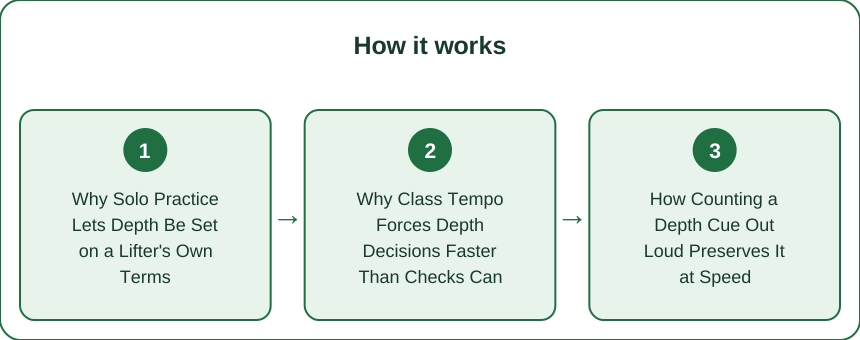
How Counting a Depth Cue Out Loud Preserves It at Speed
The fix: silently-count-a-single-short-depth-cue-like-hips-back-on-every-rep-during-class-so-the-check-happens-automatically-at-tempo-instead-of-requiring-a-conscious-pause-to-verify-it (silently repeating a single short depth cue, like hips back, on every rep during class, so that the depth check happens automatically at whatever tempo the class is moving, instead of requiring a conscious pause each time to verify it, per the squat-variations-for-stronger-legs-guide logic — silently-repeating-a-single-short-depth-cue-like-hips-back-on-every-rep-during-class-so-the-depth-check-happens-automatically-at-tempo-instead-of-requiring-a-conscious-pause), and the frame (a short repeatable cue replacing a conscious check the class’s speed no longer allows)).
Solo squat practice lets a lifter set their own pace, checking hip crease depth and knee tracking on every rep, while a group class’s set tempo forces that same decision faster than there’s time to consciously check it, causing depth to quietly shrink. Repeating a single short depth cue like hips back on every rep during class lets that check happen automatically at tempo, preserving depth the class’s speed would otherwise erode rep by rep.
See It in Motion
Seen here: High Waist Bootcut Yoga Pants — shop it on bubblelime.com
Keep Reading
This article is for general informational and styling purposes only. Fit, sizing, and product availability may vary.