Why Butt Wink at the Bottom of a Squat Is a Mobility Problem, Not a Flexibility One
The pelvis tucking under at the bottom of a deep squat, known as butt wink, gets treated as a flexibility problem and answered with more static stretching, but it’s more often a hip mobility and control issue, meaning the muscles need to move the joint through a fuller range under load, not just lengthen at rest.

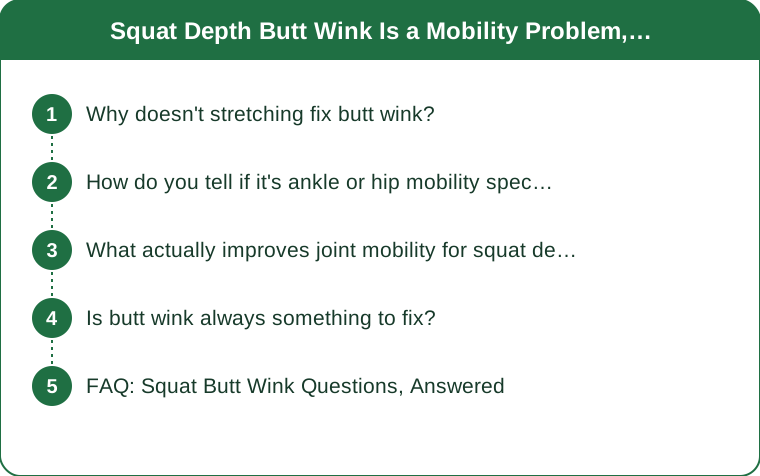
Why Butt Wink Gets Labeled a Flexibility Issue
The assumption: any restriction showing up at the end range of a stretch-like position, such as a deep squat, naturally getting filed under flexibility, which points people toward static stretching as the default fix.
Why Mobility Is a Different Issue Than Flexibility
The distinction: flexibility describing a muscle’s passive ability to lengthen, while mobility describes a joint’s ability to move actively and with control through its full range under load, and butt wink specifically involves the hip losing control at squat depth under load, a mobility issue rather than a passive lengthening one.

Why Static Stretching Alone Doesn’t Fix It
The mismatch: static stretches lengthening a muscle in a passive, unloaded position, which does little to train the active hip control needed to maintain pelvic position while descending under the load and coordination demands of an actual squat.
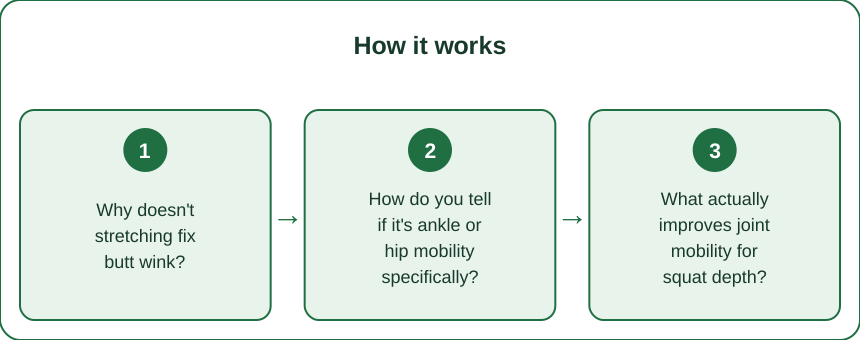
What Actually Improves Squat Depth Without the Tuck
The better approach: loaded mobility drills like goblet squat holds at end range and controlled articular rotations for the hips, which train active control through the exact range and loading pattern a squat requires, and the frame (butt wink is a hip control problem under load, not a passive flexibility one — loaded mobility drills are what actually resolve it, not static stretching alone.)
The pelvis tucking under at the bottom of a deep squat, known as butt wink, gets treated as a flexibility problem and answered with more static stretching, but flexibility describes a muscle’s passive ability to lengthen, while butt wink specifically involves the hip losing active control at squat depth under load, a mobility issue rather than a passive lengthening one. Static stretches lengthen a muscle in a passive, unloaded position, which does little to train the active hip control needed to maintain pelvic position while descending under the load and coordination demands of an actual squat. Loaded mobility drills like goblet squat holds at end range and controlled articular rotations for the hips train active control through the exact range and loading pattern a squat requires, and are what actually resolve butt wink rather than static stretching alone.
See It in Motion
Seen here: High Waist Embossed Yoga Leggings with Side Pockets — shop it on bubblelime.com
Keep Reading
This article is for general informational and styling purposes only. Fit, sizing, and product availability may vary.