The Goblet Squat: The Best Squat for Learning Form (and Why Everyone Should Do It)
Quick Answer: Hold a dumbbell or kettlebell vertically at your chest, elbows tucked in. Feet shoulder-width, toes slightly out. Sit straight down between your feet until your elbows are inside your knees, keeping your chest up. Drive through the whole foot to stand. Start with 8–15 kg for most people and do 3 sets of 8–12. The front-loaded weight does the coaching for you — it physically prevents the forward lean that ruins most squats.
Here’s the strange thing about the goblet squat: adding weight to the front makes squatting easier to do correctly.
Bodyweight squats let you fold forward, shift onto your toes, and cut the depth, all without noticing. Put 15 kg at your chest and none of those are options anymore — you’d fall over. The weight is a coach that never stops paying attention.
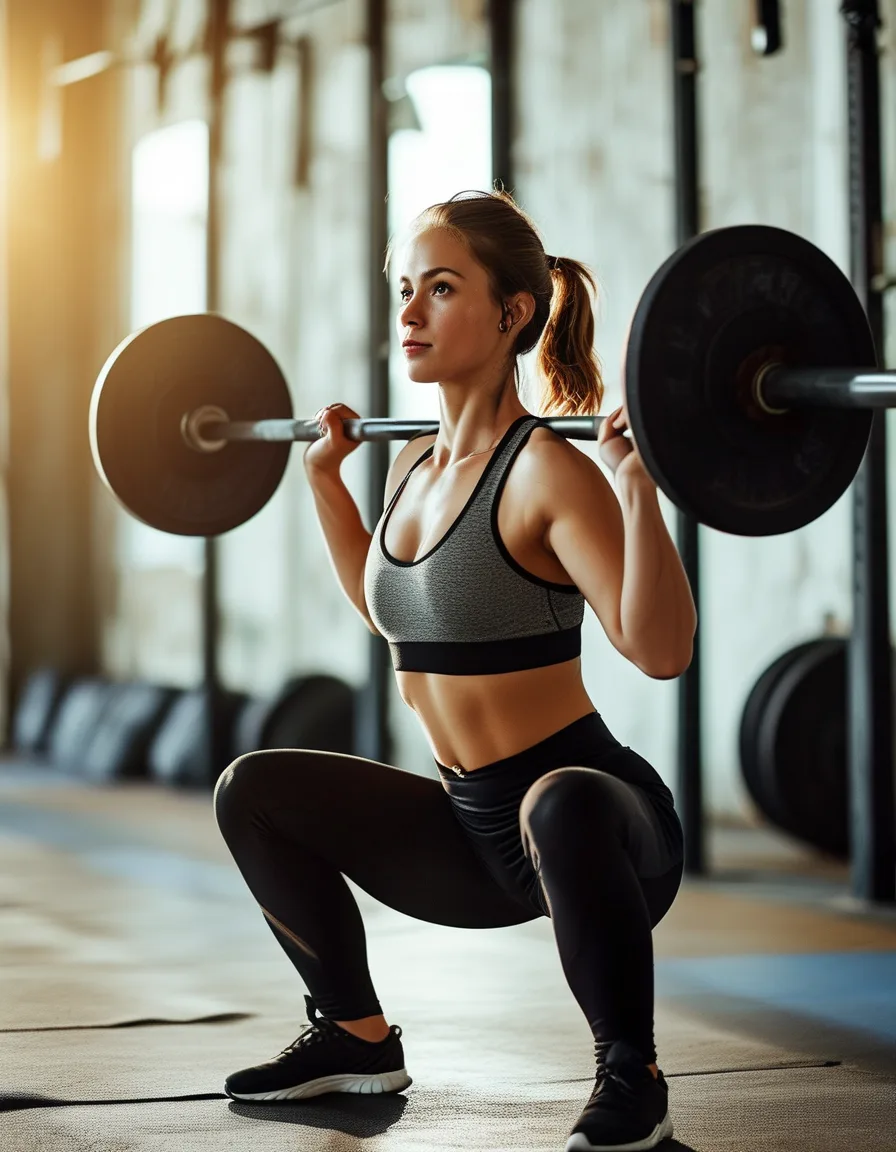
Why the goblet squat teaches form better than any other squat
The front load forces an upright torso. Holding weight in front shifts your center of mass forward, so your body has to sit more upright to stay balanced. Lean forward and you’d drop the weight. This is the mechanic, and it’s automatic — no cue required.
It counterbalances you into depth. The forward weight acts as a counterweight, letting you sit further down than you can with bodyweight alone. Many people hit a genuinely deep squat on their first goblet squat after months of stopping at parallel.
Your elbows give you a depth marker. Elbows sliding inside your knees at the bottom is a clear, self-checking target you can feel without a mirror.
It’s low-risk. If a rep goes wrong, you set the weight down. There’s no bar on your back and no rack required.
It works for everyone. Beginners use it to learn. Experienced lifters use it as a warm-up, a mobility drill, and a high-rep finisher. It doesn’t stop being useful.
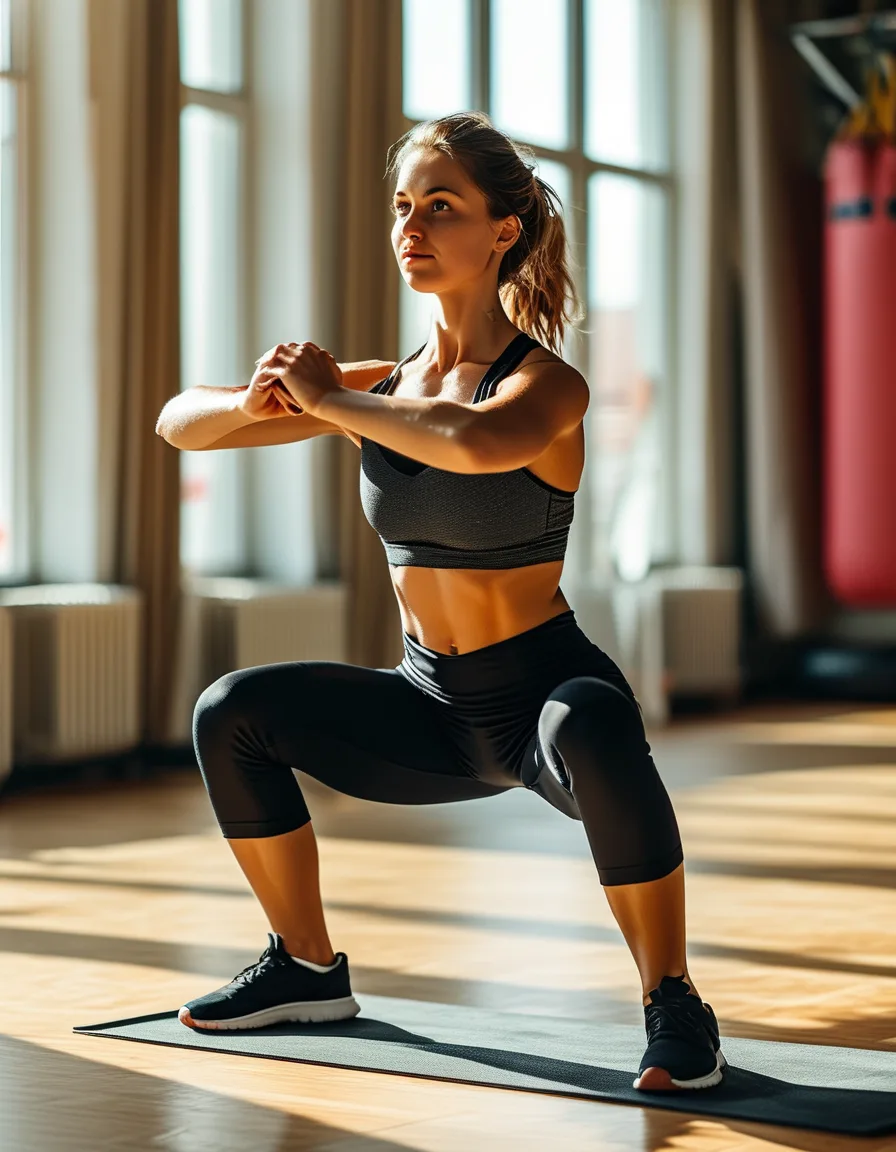
How to do a goblet squat, step by step
1. Hold the weight. A dumbbell held vertically by one end, cupped under the top plate, or a kettlebell held by the horns. Keep it against your chest — not out in front. Elbows pointing down and tucked in, not flared out.
2. Set your stance. Feet roughly shoulder-width, toes turned out 10–30 degrees. There’s no universal stance — go with what lets you reach depth comfortably, and it varies a lot between people based on hip anatomy.
3. Brace. Take a breath into your belly and tighten your core as though you’re about to be poked in the stomach. Hold that pressure through the rep.
4. Descend. Sit down between your feet, not way back like a hip hinge. Take 2–3 seconds on the way down. Knees track in the same direction your toes are pointing, and yes — they should travel forward over your toes. That’s normal and safe.
5. Hit depth. Go until your elbows are inside your knees, ideally with your hip crease at or below your knee. If you can’t get there without your lower back rounding, stop just above that point and work on mobility.
6. Drive up. Push through the whole foot — heel and mid-foot, not just the heel and not the toes. Keep your chest up and don’t let your hips shoot back first.
7. Stand tall and repeat. Don’t rush the transition; reset your brace at the top.
Where to start: most beginners do well at 8–15 kg. Go with a weight where 12 reps is challenging but every rep is perfect. Sets of 3 × 8–12 is the standard prescription.
5 mistakes everyone makes with goblet squats
1. Holding the weight away from the chest. The moment the dumbbell drifts forward, your upper back rounds and your shoulders fatigue before your legs do. Keep it pressed to your sternum.
2. Flaring the elbows out. Elbows should point down, not out to the sides. Flared elbows make the weight harder to control and encourage a forward lean.
3. Rising hips-first. If your hips shoot up while your chest stays down, you’ve turned the squat into a bad morning stretch. Chest and hips rise together — think “drive the chest up.”
4. Cutting depth because the weight is heavy. A partial rep with 24 kg builds less than a full rep with 12. If depth is going, drop the weight.
5. Believing the knees-over-toes myth. Knees traveling forward past the toes is normal, safe for healthy knees, and necessary for a deep upright squat. The old rule has been contradicted by the research for years, but it lives on in gyms forever.
The last one costs people the most — restricting knee travel just shifts load to the lower back and caps how deep you can go.
Using the goblet squat well
As a form teacher. Do 4–6 weeks of goblet squats before touching a barbell. You’ll arrive at the back squat already knowing what depth, bracing, and an upright torso feel like.
As a mobility drill. Hold the bottom position for 20–30 seconds with the weight at your chest, gently pushing your knees out with your elbows. Three rounds. This is one of the most effective hip and ankle mobility exercises there is, and the counterweight is what makes it possible.
As a butt-wink diagnostic. If your pelvis tucks under at the bottom (the “butt wink”), the goblet squat lets you find exactly where it happens and stop one inch above it. Working just above that point, and doing the mobility hold, is how you fix it.
As a warm-up. 2 sets of 10 before heavy squatting or deadlifting.
As a finisher. 2 sets of 20 at a moderate weight will humble anyone.
Progression: add 2–4 kg when you can hit 12 clean reps. Goblet squats do run out of runway eventually — once you’re holding 30–40 kg, the limiting factor becomes your grip and upper back, not your legs. That’s the signal to move to front squats or back squats, keeping goblets as a warm-up and mobility tool.
When to be careful
Get a clinician’s or physio’s input before loading squats if you have current knee or lower-back pain, a recent injury, or a hip replacement. Sharp joint pain during a rep is a stop signal — muscle burn isn’t. If your lower back rounds before you reach depth, that’s an ankle or hip mobility limit, not something to push through; work above that point and improve mobility separately. Breathe out on the way up rather than holding your breath through multiple reps.
FAQ
How heavy should a goblet squat be?
Most beginners start at 8–15 kg. Choose a weight where the last rep of a set of 12 is hard but your depth and posture are unchanged. Working up to 20–30 kg for sets of 10 is a solid intermediate standard; beyond that, grip and upper back usually become the limit.
Is the goblet squat better than a back squat?
For learning — yes, clearly. For maximal strength and load — no, the back squat lets you handle far more weight. They’re complementary: goblet squats teach the pattern and stay useful as a warm-up and mobility drill; back squats and front squats are where you load heavy later.
Are goblet squats good for beginners?
They’re arguably the single best first squat. The front-loaded weight automatically corrects the two most common beginner errors — forward lean and insufficient depth — without needing a coach standing over you, and there’s no risk of getting stuck under a barbell.
TL;DR:
- Hold the weight vertically at your chest, elbows down and tucked, not flared.
- Sit straight down between your feet until your elbows are inside your knees.
- The front load automatically prevents forward lean and unlocks depth — that’s the whole magic.
- Start at 8–15 kg, 3 sets of 8–12, 2–3 seconds on the descent.
- Knees traveling over your toes is normal and necessary. The old rule is a myth.
- Use the bottom hold (20–30 seconds) as a hip and ankle mobility drill.
- Move to front or back squats when grip and upper back become the limit, around 30–40 kg.
See It in Motion
Seen here: High Waist Bootcut Yoga Pants — shop it on bubblelime.com
Keep Reading
This article is for general informational and styling purposes only. Fit, sizing, and product availability may vary.