7 Squat Cues That Actually Contradict Each Other (And What to Do Instead)
Quick Answer: Several widely repeated squat cues genuinely conflict with each other because they were developed for different squat styles, goals, or body proportions — the fix isn’t finding the one universally correct cue, it’s matching the right cue to your specific squat style and build.
One coach says knees forward, the last one said knees back — and both were technically right for a different kind of squat.
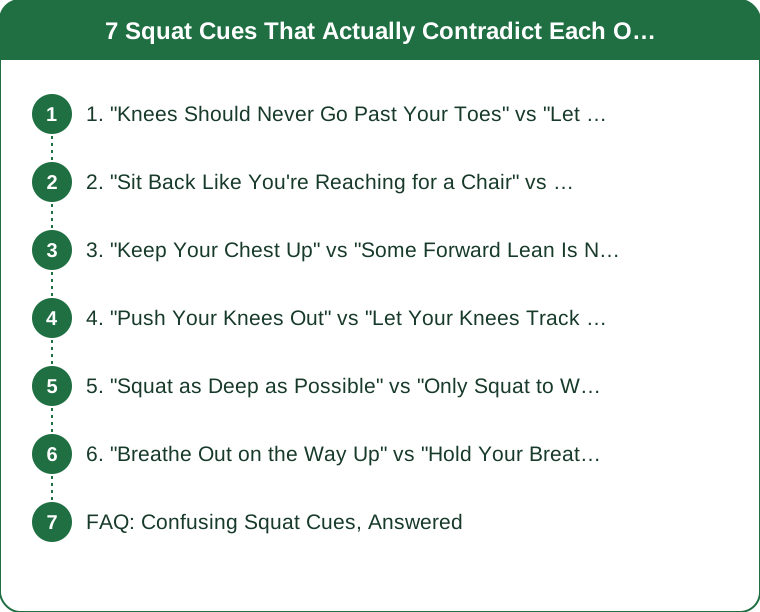
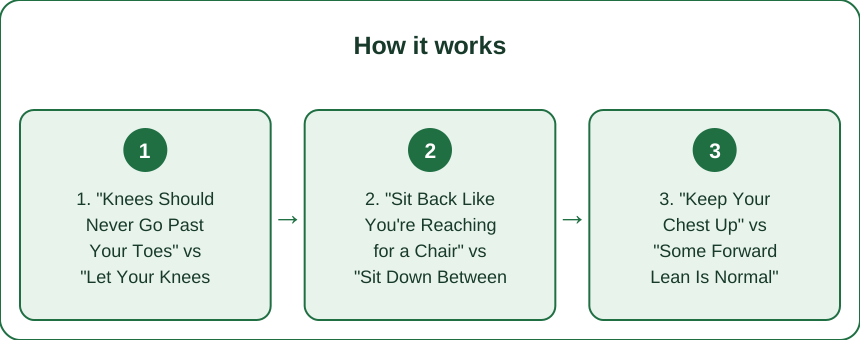
1. “Knees Should Never Go Past Your Toes” vs “Let Your Knees Travel Forward”
This is one of the most repeated contradictions in squat coaching. The “never past toes” cue was popularized as a general injury-prevention rule, but for many body proportions — especially shorter femurs relative to torso length — restricting forward knee travel actually forces excessive forward lean and lower back strain instead. Modern coaching generally allows natural forward knee travel as long as the knee tracks in line with the foot, not caving inward.
2. “Sit Back Like You’re Reaching for a Chair” vs “Sit Down Between Your Legs”
“Sit back” cues a hip-dominant squat pattern, useful for powerlifting-style low-bar squats where the hips drive the movement. “Sit down between your legs” cues a more knee-dominant, upright squat, closer to a high-bar or goblet squat pattern. Neither is universally correct — which one applies depends entirely on which squat variation is actually being performed.
3. “Keep Your Chest Up” vs “Some Forward Lean Is Normal”
An overly rigid “chest up” cue can actually pull people out of a stable, balanced position, especially in low-bar squats where a moderate forward torso lean is a normal, necessary part of maintaining balance over the bar. The more accurate underlying goal is a neutral, non-rounded spine, not a perfectly vertical torso at all times.
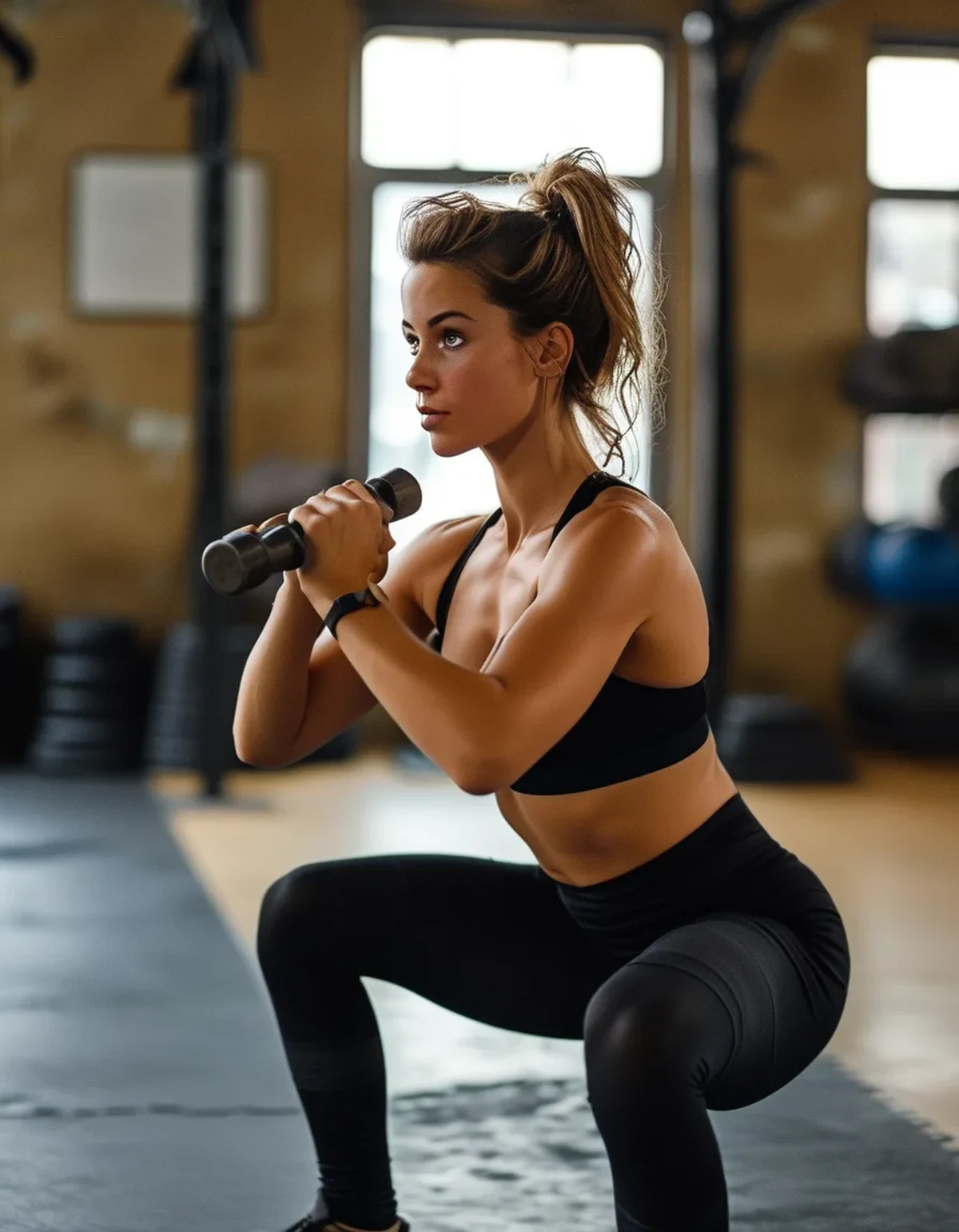
4. “Push Your Knees Out” vs “Let Your Knees Track Naturally”
Actively pushing knees outward helps some people avoid inward knee collapse, but exaggerating it can push other people into an unnatural, hip-straining position. The actual goal is a knee that tracks in line with the foot’s angle, not a maximum outward push — the cue is a correction for a specific fault, not a permanent instruction for every squat.
5. “Squat as Deep as Possible” vs “Only Squat to Where You Have Control”
Depth cues get contradictory because “full depth” is genuinely beneficial for muscle development and mobility when control is maintained, but chasing depth past the point of losing spinal position or pelvic tuck (sometimes called butt wink) trades a training benefit for real injury risk. Depth should be earned through mobility work, not forced past current control.
6. “Breathe Out on the Way Up” vs “Hold Your Breath Through the Whole Rep”
Both are legitimate techniques for different contexts. Controlled exhale on the ascent works well for lighter, higher-rep training. Bracing with a held breath (the Valsalva maneuver) is a legitimate technique specifically for heavier, near-maximal lifts where core stability under load matters more than smooth breathing — using the wrong one for the wrong context is where confusion comes from, not the cues themselves being wrong.
FAQ: Confusing Squat Cues, Answered
Why do different coaches teach genuinely opposite cues instead of agreeing on one?
Many cues were developed for specific squat styles, sports, or body types, and get passed along without that context, so two correct cues for different situations end up sounding like a direct contradiction.
How should a beginner actually pick which cue to trust?
Starting with the squat variation’s actual goal (general fitness goblet squat versus competitive low-bar squat) narrows down which cue set actually applies, rather than trying to follow every cue simultaneously.
Is it normal to need different cues on different days for the same squat?
Yes — fatigue, mobility fluctuations, and even shoe choice can shift which cue is most useful on a given day, so treating cues as situational tools rather than fixed rules tends to work better long-term.
TL;DR:
- Many popular squat cues conflict because they were built for different squat styles or bodies
- “Knees past toes” restrictions often cause more harm than the forward travel they prevent
- Sitting back versus sitting down cues match different squat variations, not one universal form
- Depth and knee-push cues are corrections for specific faults, not permanent blanket instructions
- Matching the cue to your specific squat goal resolves most of the apparent contradiction
The cues aren’t wrong — they’re just being applied outside the context they were built for.
See It in Motion
Seen here: High Waist Bootcut Yoga Pants with Side Pockets — shop it on bubblelime.com
Keep Reading
This article is for general informational and styling purposes only. Fit, sizing, and product availability may vary.